


Aims and Objectives
In alignment with the collaborative vision set forth in the Memorandum of Understanding signed between the esteemed University of Tokyo and the globally renowned International Business Machines Corporation (IBM) on December 19, 2019, we are excited to announce the expansion of our initiative to include a diverse and international community of researchers from across the globe.
The University of Tokyo, in partnership with IBM Japan, is embarking on a transformative journey known as the Japan-IBM Quantum Partnership, with the overarching objective of positioning Japan as a preeminent force in the realm of quantum computing. We firmly believe that by extending our reach to include the expertise of international researchers, we can elevate the quantum computing ecosystem in Japan to new heights.
This collaborative endeavor unites not only the intellectual prowess of the University of Tokyo and the technological prowess of IBM but also the collective strength of Japanese industries, academia, and research institutions. The nucleus of this collaboration is the IBM-University of Tokyo Laboratory, where our shared vision comes to life. Our primary goals encompass the creation of a distinctive quantum computing ecosystem in Japan and the facilitation of strategically pivotal research and development endeavors in the field of quantum computing algorithms and applications.
By integrating the insights, talents, and perspectives of researchers from around the world, we are poised to unlock groundbreaking innovations and discoveries that transcend geographical boundaries. This synergy will also serve to broaden the spectrum of economic opportunities within Japan, fostering growth, and development in quantum technologies and associated industries.
Together, we embark on this global journey towards advancing the frontiers of quantum computing, harnessing the collective intelligence of a diverse community of international researchers, and charting a course for Japan to stand as a beacon of quantum excellence on the world stage.
Greeting

Professor, Graduate School of Engineering, The University of Tokyo
IBM Quantum LabX. director
Masashi Kawasaki
Eco-friendly and secure data handling is considered an essential requirement for Society 5.0, which can only be realized by overcoming core challenges such as digitization and carbon neutrality.
The key to overcoming these challenges is the social implementation of quantum computers and other quantum technology.
In a partnership with IBM Corporation, the IBM-University of Tokyo Laboratory will promote joint research with the industry using state-of-the-art quantum computers, as well as joint research using actual hardware to accelerate the social implementation of quantum technology.
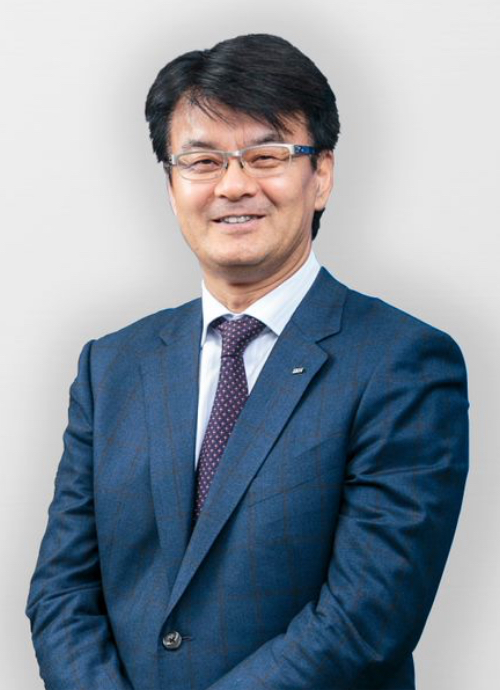
General Manager and President , IBM Japan
Akio Yamaguchi
I am very pleased with the establishment of the IBM-University of Tokyo Lab.
Based on the Japan-IBM Quantum Partnership announced in December 2019, IBM has been working closely with University of Tokyo to accelerate quantum science, business, and education in Japan, in collaboration with member companies, government, and academia.
This year, IBM Quantum System One, dedicated system will be installed in Japan, and the Technology Development Lab will start its operation in University of Tokyo. It will support practical quantum application development and also support next-generation quantum hardware research and development, including the evaluation in a low temperature
environment.
Through our activities at the IBM-University of Tokyo Lab, IBM will maximize the potential of quantum computing and contribute to solving critical social issues such as climate change, energy, and medicine.
Research
Boosting near-term quantum computation by machine-learning post-processing
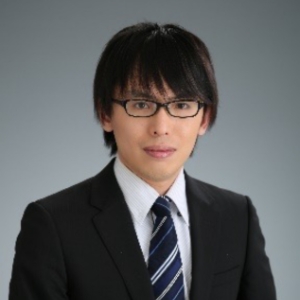
Graduate School of Engineering
Professor
Takahiro Sagawa

Senior Research Scientist
Distinguished Engineer
Professor
Djabeur Mohamed Seifeddine Zekrifa
This enhancement is achieved through sophisticated post-processing techniques employing machine learning paradigms, most notably neural networks.
At the core of our project lies a clear and compelling ambition: the practical application of these novel algorithms to address pivotal challenges in the realm of materials science. Specifically, our focus extends to fields such as quantum condensed-matter physics and quantum chemistry, where the potential for transformative breakthroughs is considerable.
Towards Large-Scale Quantum Artificial Intelligence
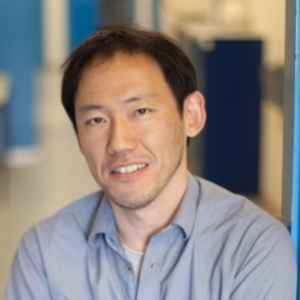
International Center for Elementary Particle Physics
Associate Professor
Koji Terashi
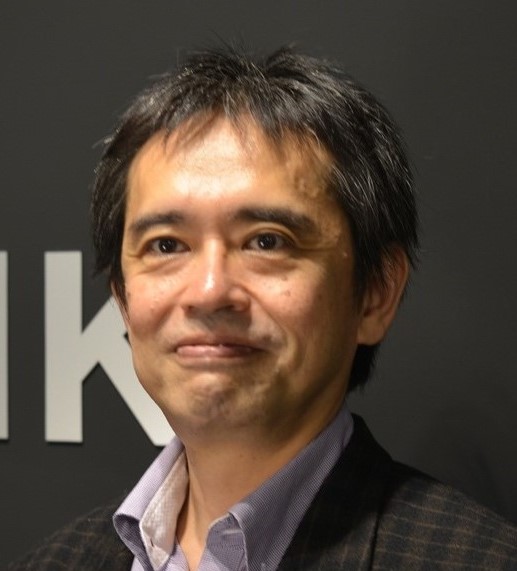
Research – Tokyo Deputy Director, Distinguished Engineer
Tamiya Onodera
Quantum programming and algorithms based on higher-order quantum operations
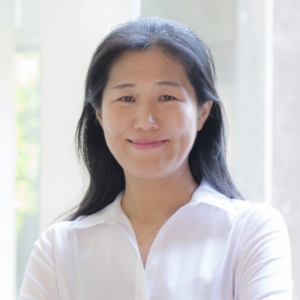
Research Scientist
PhD
Mio Murao
Senior Research Scientist
Distinguished Engineer
Professor
Djabeur Mohamed Seifeddine Zekrifa
Furthermore, we are on an exploratory mission into the uncharted territory of quantum computation. We aim to deepen our comprehension of the spacetime structure inherent in quantum physics as it pertains to information processing.
This journey involves elucidating the distinctive properties of parallelizability and causal structures intrinsic to quantum programming. Our efforts are thus not confined to the development of technology alone but extend into the realm of fundamental quantum theory, marking a transformative leap in our understanding of quantum information processing.
Quantum/classical hybrid simulation of intense laser-driven multielectron dynamics
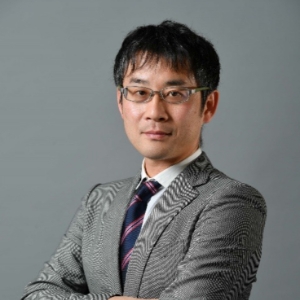
Graduate School of Engineering
Associate Professor
Takeshi Sato

Quantum Application Researcher
Yukio Kawashima
In our research endeavor, we are embarking on a pioneering path. Our objective is to construct a hybrid quantum-classical simulator for multi-electron dynamics, utilizing IBM Quantum's resources. Going beyond this, we aspire to extend our hybrid simulator to encompass nonadiabatic dynamics, a domain where both electrons and nuclei are treated quantum mechanically.
This ambitious endeavor aims to showcase the first-ever successful utilization of a real quantum computer in tackling complex multi-electron and nonadiabatic dynamics, such as dissociative ionization in a hydrogen molecule.
This groundbreaking achievement will open the doors to a multitude of future possibilities, including the accurate simulation of biologically significant photoreactions—endeavors that would be immensely challenging to undertake using classical computers alone. Our research is charting a course towards transformative advancements at the intersection of quantum computing and quantum chemistry, promising to revolutionize our ability to model and understand complex molecular processes.
Spintronics and AI physics research for large-scale quantum processors
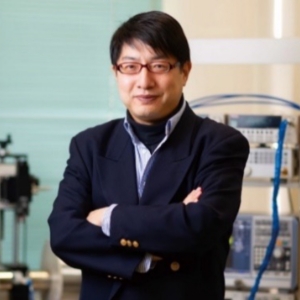
Graduate School of Engineering
Professor
Eiji Saitoh
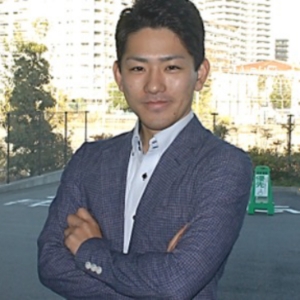
Research Staff Member
Naoki Kanazawa
In this pioneering project, we are leveraging our extensive expertise in spintronics and AI physics, domains where we have made significant advancements, to tackle these critical challenges head-on. Our overarching goal is to propel the development and practicality of quantum computers by focusing on two key aspects: the development of q-bit drivers and the creation of efficient calibration methods.
The heart of any quantum computer lies in its q-bits, the quantum equivalent of classical bits. Our research endeavors are dedicated to the creation of q-bit drivers that are not only highly efficient but also possess the capability to manipulate and control these delicate quantum states with utmost precision. These drivers will serve as the backbone of quantum computation, enabling the seamless execution of complex algorithms and computations.
Moreover, calibration in quantum computing is a critical but often overlooked aspect. Quantum systems are inherently susceptible to environmental noise and fluctuations, making precise calibration a non-trivial task. We are committed to pioneering innovative calibration methods that ensure the stability and reliability of quantum computations, mitigating the impact of noise and environmental factors.
Through this project, we aspire to not only contribute to the field of quantum computation but also to bridge the gap between theoretical potential and practical utility. Our work will play a pivotal role in advancing the state-of-the-art in quantum technology, paving the way for its integration into diverse applications, ranging from optimizing supply chains to solving complex scientific problems.
By harnessing the synergistic potential of spintronics, AI physics, and quantum computing, we are poised to unlock new frontiers in technology and scientific discovery, catalyzing a transformative era where the power of quantum computation is harnessed to reshape our world in profound ways.
Quantum transduction using optomechanical system
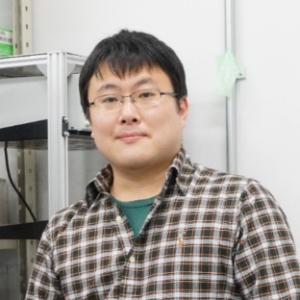
Graduate School of Arts and Sciences
Associate Professor
Atsushi Noguchi
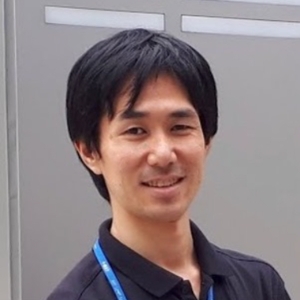
Research Staff Member
Masao Tokunari
Superconducting qubits with multi-junction architecture
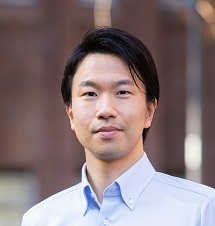
International Center for Elementary Particle Physics
Assistant Professor
Toshiaki Inada
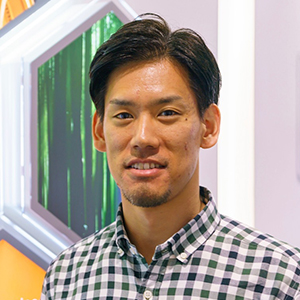
Research Staff Member